
Section 08 · Companies
08Maturity & Scores
Instinct doesn't just gather facts about a company — it weighs them into scores that tell you, at a glance, how established a business looks and how strong it is in its market. Two scores matter most: the Fox Crow Maturity Level and Territory Health. This section explains what they mean, how to read the sub-scores behind them, and how to use the modeled revenue and staff estimates.
The Fox Crow Maturity Level (FCML)
The Fox Crow Maturity Level — FCML for short — is a single 1-to-5 rating of how mature and well-established a company appears, built entirely from public signals. Open a company's Maturity Overview tab to see it as a large dial, from 1 · Nascent up to 5 · Mature.
Read it as a quick answer to "how put-together is this business?" A low score points to a company that's early, thin online, or hard to verify; a high score points to one with a strong website, solid technical setup, real hiring, an active social presence, and the other marks of an established operation. It's a starting read, not a verdict — the value is in the sub-scores that explain why.
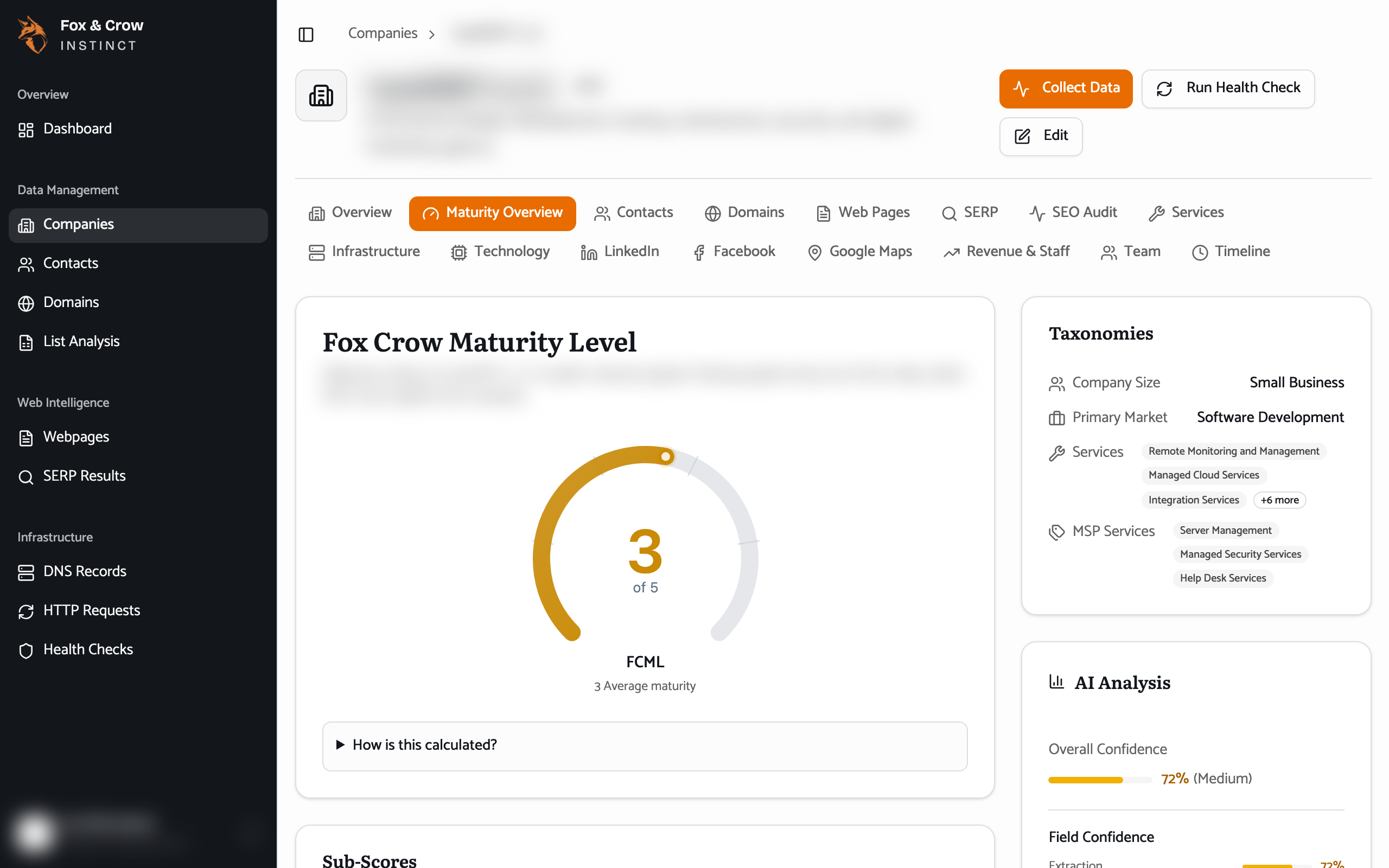
Figure 8.1The Maturity Overview tab. The headline FCML dial up top, and the twelve sub-scores that feed it below.
How it's calculated
The FCML is a weighted blend of twelve smaller scores. On the tab, a How is this calculated? panel opens a table showing each source, the weight it carries, and the contribution it made to this company's score — and it's honest about gaps: any source with no data is marked Excluded (no data) and left out of the math rather than counted as a zero. That means a company isn't punished for a signal we simply haven't collected yet.
The twelve sub-scores
Each sub-score is its own small gauge. Together they're a diagnostic: scan them to see where a company is strong and where it's thin.
| Sub-score | What it reflects |
|---|---|
| Infrastructure Security | Email and DNS authentication — SPF, DMARC, DKIM (Section 10). A strong signal of a company that runs its own house well. |
| Website | The presence and quality of the company's website. |
| Tech Stack | The vendors and tools the company runs. |
| SEO Health | How technically sound the site is for search (Section 09). |
| SERP Visibility | How visible the company is in search-engine results. |
| Service Breadth | How wide a range of services the company offers. |
| Compliance | Public mentions of compliance frameworks (for example SOC 2). |
| Hiring | Active job postings — a sign of a growing, staffed business. |
| LinkedIn · Facebook · Google Maps · Glassdoor | Presence and activity on each of these platforms. |
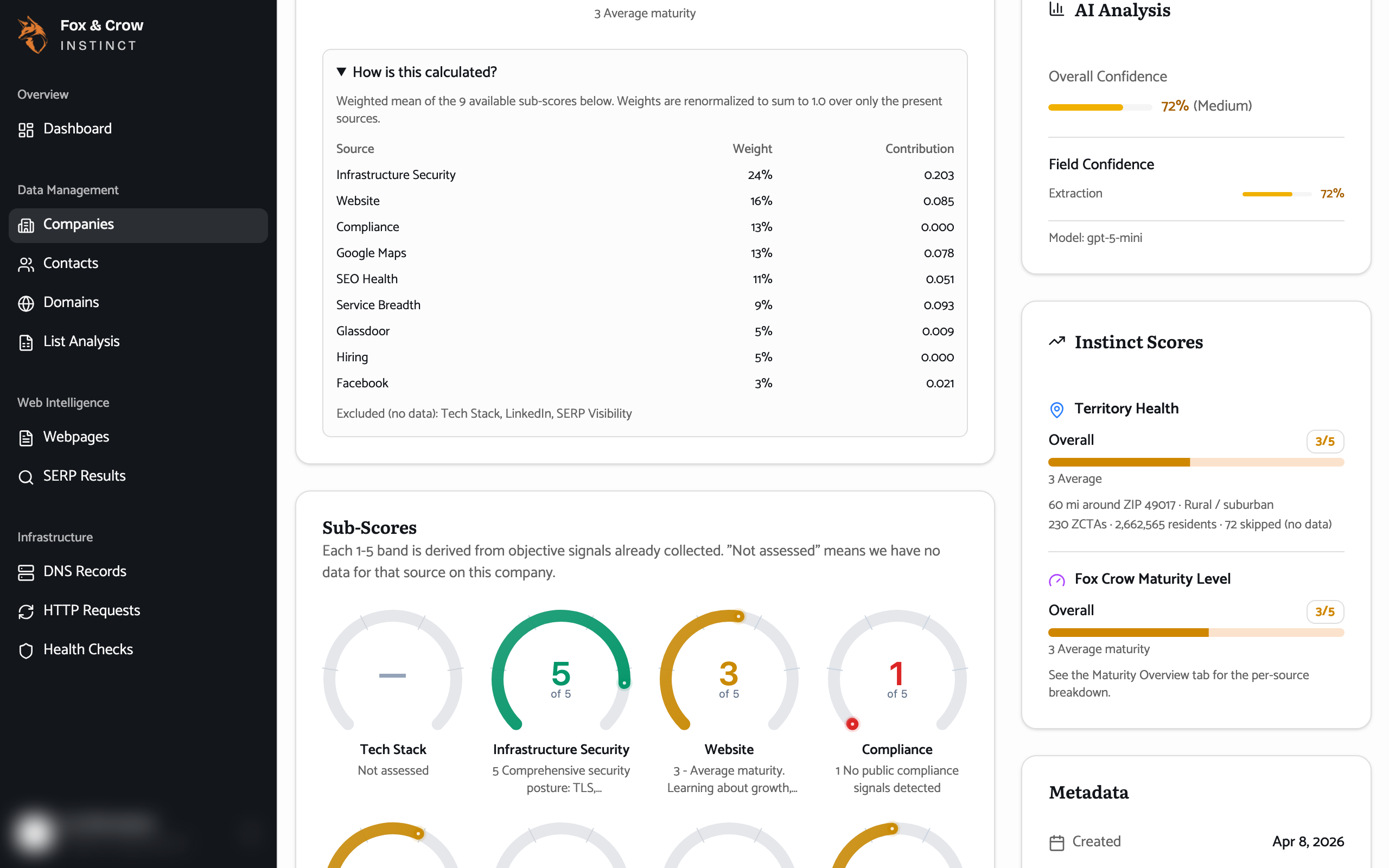
Figure 8.2The calculation breakdown. Each source's weight and contribution, with missing sources excluded rather than scored zero.
A low score can just mean "thin online"
A capable company with a bare-bones web presence can score low — the FCML measures what's visible, not the quality of their work. Use the sub-scores to tell the two apart: a company strong on infrastructure and hiring but weak on social is a different story from one that's thin everywhere.
Territory Health
Territory Health is the second headline score, shown on the company's Instinct Scores sidebar card as a 1-to-5 band from 1 · Very Weak to 5 · Very Strong. Where FCML measures the company itself, Territory Health measures how strong the company looks in its local market — its footprint and standing across the area it serves. The card includes a short breakdown of the geography behind the number.
Revenue & Staff estimates
The Revenue & Staff tab gives modeled estimates of a company's size and revenue — useful for sizing an opportunity when hard numbers aren't public. Because they're modeled, treat them as informed estimates, not audited figures.
- Inputs — the assumptions the model is using. You can override the staff count here to pressure-test the estimate: change it and watch the matrices below move, to see how sensitive the numbers are.
- Revenue × ARR-mix matrix — estimated revenue across different assumptions about recurring-revenue mix.
- EUM × AISP matrix — an estimate built from end-users-managed against average per-seat price. (The Glossary defines these terms.)
If a company doesn't have enough underlying data to model, the tab says the estimate is unavailable rather than guessing.
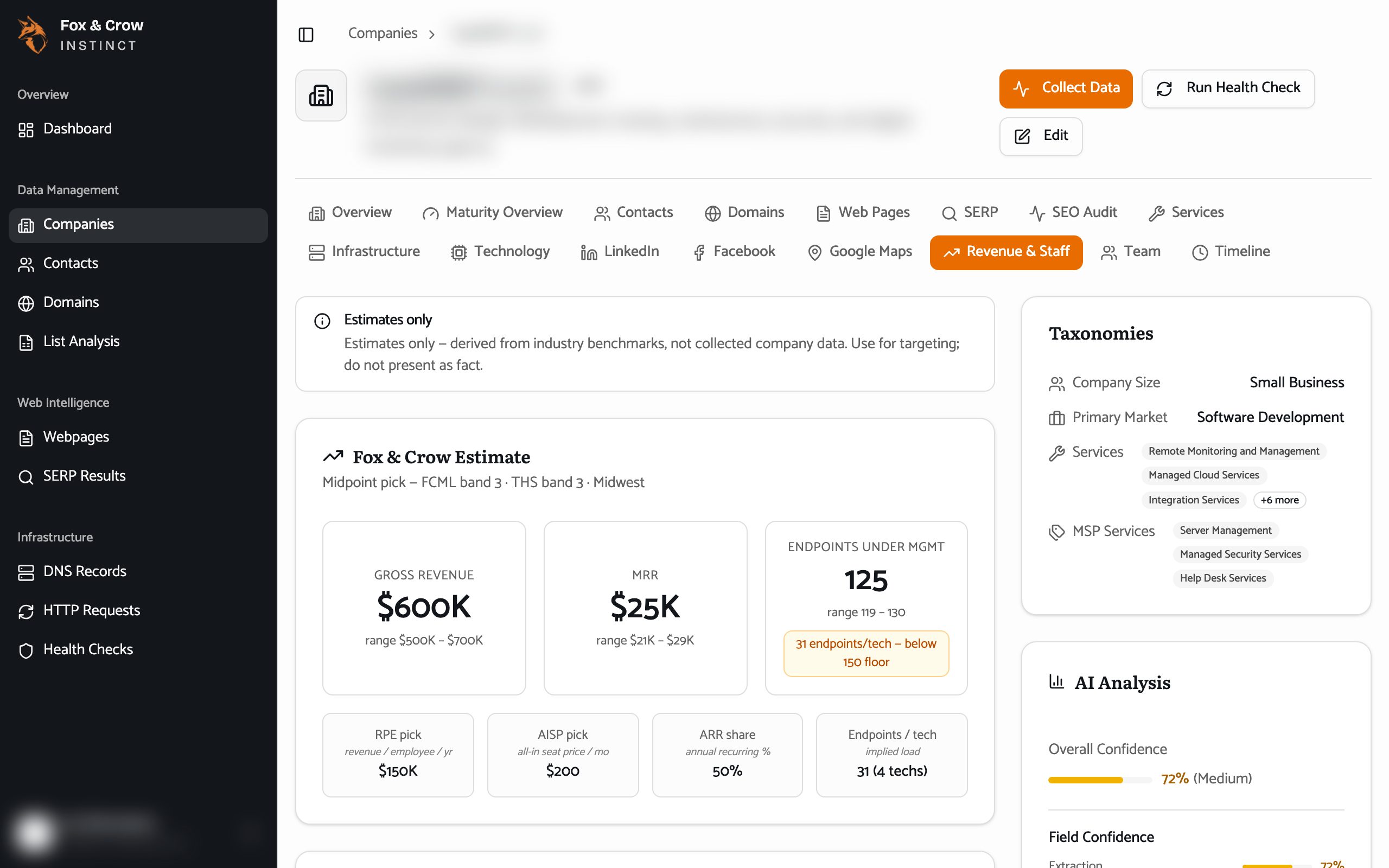
Figure 8.3Revenue & Staff. Override the staff input on the left to see how the modeled estimates on the right respond.
The bottom line
Two scores to triage, twelve to explain.
FCML tells you how established a company looks; Territory Health tells you how strong it is locally. When a score surprises you, the sub-scores and the calculation table show you exactly why.